Inclusive space
Access beyond the ramp
A ramp at a building entrance is the familiar symbol of access, but people experience a city as continuous journeys. Inclusive design asks whether a whole route — from front door to bus stop to shop counter — works for people using wheelchairs, walking with a stick, pushing a buggy, living with sight loss, or simply tired. The answers lie in surfaces, rest points, light and signs.
From compliance to whole journeys
Many countries set minimum accessibility standards for buildings and streets. These matter, but a design can meet each requirement individually and still fail as a sequence. A step-free entrance helps little if the nearest crossing has no dropped kerb, or if the only bench is out of reach.
Inclusive design is often linked to the social model of disability, which locates barriers in the environment rather than in individual bodies. In practice it means involving people with different needs early, testing routes rather than features and accepting that one design rarely suits everyone equally. Specific legal requirements differ between countries and change over time; for a particular building or street, the local authority or a qualified access consultant can say what applies. Nothing here is legal advice.
Surfaces underfoot
The ground is the first thing a route asks of anyone moving along it. Firm, level and slip-resistant surfaces suit the widest range of people. Steep sideways slopes, known as cross-falls, pull wheelchairs and pushchairs towards the road and tire anyone with weak balance. Wide or deep joints can catch casters and stick tips.
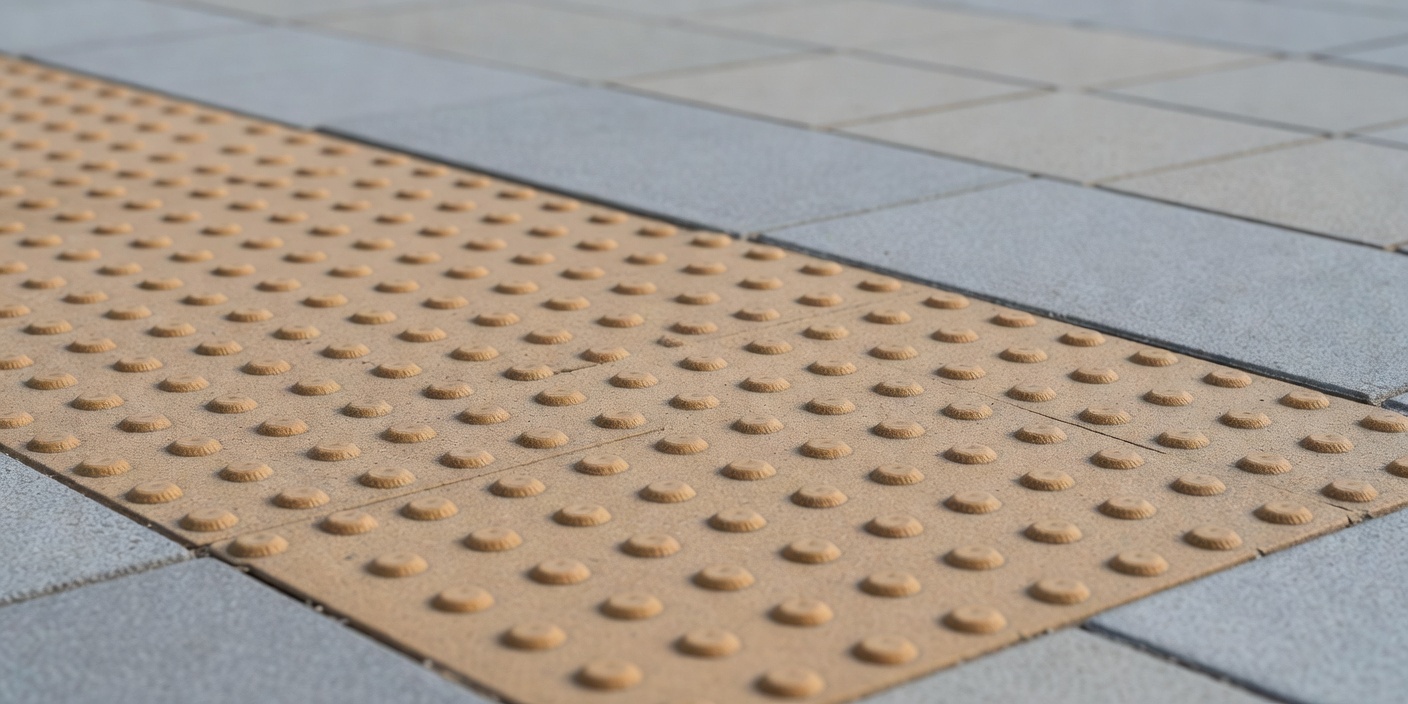
Tactile paving gives information through the feet and a long cane. In the UK, for example, raised blisters typically mark the edge of a pedestrian crossing, while raised ribs or corduroy patterns warn of hazards such as the top of steps. Patterns and their meanings vary between countries, so they are worth learning locally. Visual contrast between surfaces, edges and obstacles helps people with partial sight read the space.
Rest, light and orientation
Distance itself is a barrier for many people. Regular places to sit, ideally with backrests and armrests, make longer walks possible. Public toilets, drinking water and shelter from rain extend the range of a neighbourhood for older people and young families alike.
Lighting affects both safety and orientation. Even lighting without deep shadows or glare helps people see edges, steps and faces. Wayfinding — clear signs, readable maps, landmarks and logical layouts — reduces the effort of finding a way for visitors, people with learning disabilities and those with dementia. Some recent schemes also offer quieter spaces away from traffic noise for people who find busy streets overwhelming.
Where needs pull in different directions
Inclusive design involves real tensions. A choice that removes one barrier can create another, which is why involving a range of users matters.
| Design choice | Often helps | May be harder for |
|---|---|---|
| Level surface with no kerb | Wheelchair users, people with prams | Blind and partially sighted people who use kerbs to orient |
| Tactile paving | People with sight loss | Some wheelchair users and people with painful joints, if overused |
| Open-jointed permeable paving | Drainage, fewer puddles and ice | Narrow wheels and walking sticks if joints are wide |
| Bright, white lighting | Visibility, sense of safety | People sensitive to glare |
| Cycle tracks beside footways | Cyclists, fewer bikes on pavements | Pedestrians crossing to bus stops, if not well marked |
A route audit you can try
- Choose a short, everyday journey, such as a stop to a library entrance.
- Walk it slowly and note every change in level, surface or slope.
- Check each crossing for a dropped kerb and correctly placed tactile paving.
- Count resting places and note whether they have backs and armrests.
- Note temporary obstacles: bins, A-boards, parked scooters, overhanging plants.
- Repeat after dark and judge the lighting and signage.
Persistent problems on public routes are usually reported to the local highway or council team responsible for the street.