Street life
Streets made for lingering
Lingering — staying in a street rather than simply crossing it — has become a central aim of many street redesigns. It shows up as wider footways, more seating, more shade and planting at the kerb. Whether people actually stay depends on small decisions about height, orientation, materials and upkeep, and those decisions are easy to read once you know where to look.
From through-route to shared place
For much of the twentieth century, many streets were judged mainly by how efficiently they moved vehicles. A newer way of thinking treats a street as having two jobs at once: movement and place. A busy arterial road may lean towards movement; a high street or residential lane may lean towards place, where people meet, wait, shop and play.
The physical signs of that shift are familiar. Footways widen into former parking lanes. Short stretches of road close to through traffic at school times. Temporary platforms with seating occupy a parking bay. Junctions are tightened so that crossing is shorter. None of these is new in itself, but they increasingly appear together, and their success depends heavily on local traffic patterns, consultation and maintenance arrangements, which differ from place to place.
Seating people actually choose
A street can have plenty of benches and still feel unwelcoming. Observers of public space have long noted that people choose seats with a view of activity, some protection at their back and the option to sit alone or in company. A few specifics are worth checking:
- Backrests and armrests, which help many people sit down and rise again.
- A mix of heights, including perching rails for those who prefer not to sit low.
- Seats arranged so that some face each other and some face the street.
- Materials that stay comfortable: timber tends to stay closer to air temperature than metal or stone in sun and frost.
- Room beside benches for a wheelchair, pushchair or shopping trolley.
Some seating is designed to discourage lying down or long stays, for example with dividing armrests or sloped ledges. This is often called defensive or hostile design, and it is debated: the same armrest that helps an older person stand up can also be used to exclude. Reading the intent behind a detail requires looking at the whole space, not one bench.
Shade, shelter and the street canopy
As summers grow hotter in many regions, shade has moved from a nice extra to a basic requirement of comfortable streets. Street trees are the most visible answer. Their benefits — shade, cooler surfaces nearby, habitat and softer views — grow with the size of the canopy, and canopy size depends largely on what happens underground.
Trees planted in small pits surrounded by compacted soil often stay small or decline. Newer schemes may use structural soil or load-bearing cells that leave uncompacted soil beneath the pavement for roots. Species choice matters too: a tree must cope with local climate, limited space, possible salt from winter roads and the presence of cables and pipes. Where trees cannot grow, canopies, pergolas and the shadow of buildings do some of the same work, while also offering shelter from rain and wind.
Planting at kerb level
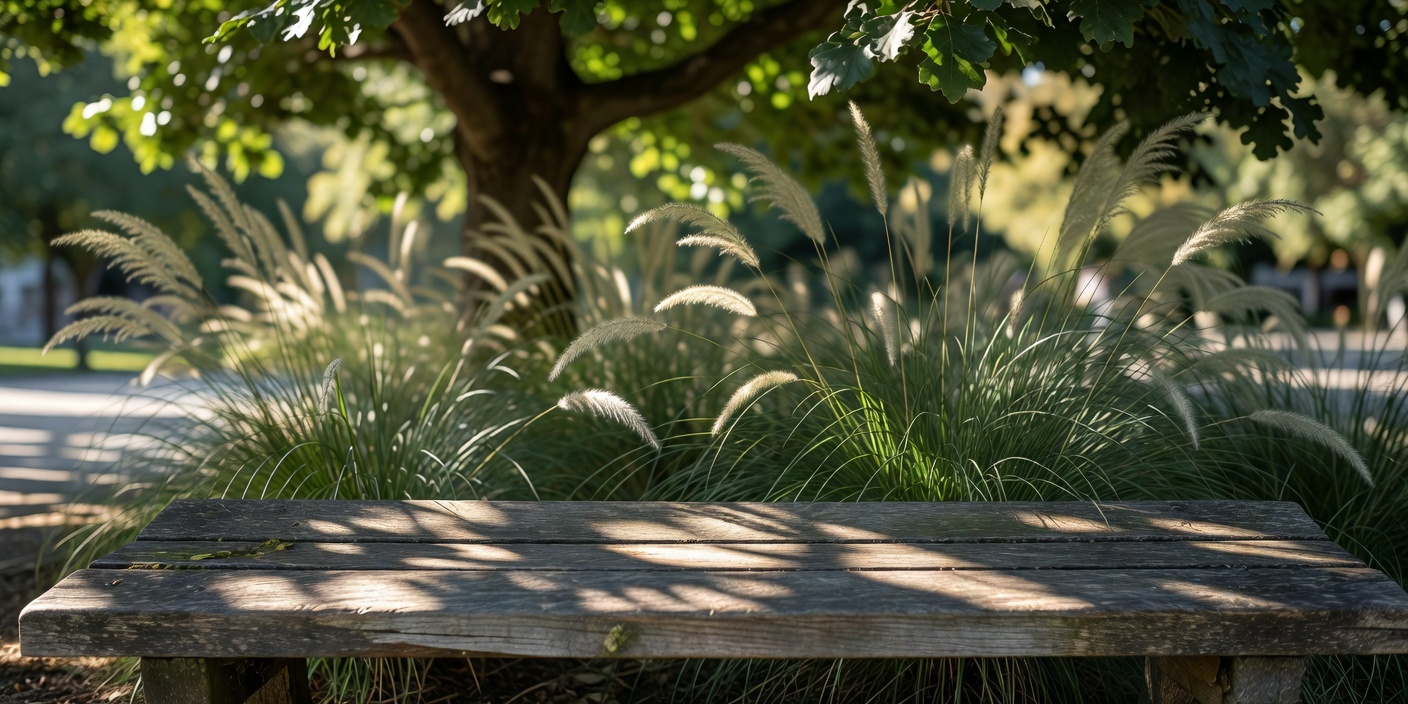
Low planting along kerbs and in former parking spaces softens hard streets, offers food for pollinators and, when set below the footway, can also catch rainwater. Planting heights affect visibility: at junctions and crossings, low plants keep sightlines clear between pedestrians and drivers. Taller grasses and shrubs work better where they shelter a seating area from traffic.
The weakest point of street planting is usually long-term care. Beds need weeding, watering in dry spells and occasional replanting. Some areas involve residents in looking after small beds; others rely entirely on the local authority or a contractor. Asking who maintains a planted space is one of the most useful questions about any street scheme.
Weighing the trade-offs
Every lingering feature asks something in return — space, money, maintenance or compromise with other users.
| Feature | What it offers | What to watch |
|---|---|---|
| Fixed benches with backs | Reliable rest points, easier sitting and rising | Placement in sun or shade, clear space beside them |
| Movable chairs | People arrange their own groups and shade | Need oversight, storage or secure fixing |
| Street trees | Shade, cooling, habitat, visual calm | Soil volume, utilities below, years to mature |
| Seating in parking bays | Quick extra space on narrow footways | Traffic noise, kerb access, local support |
| Level shared surfaces | Fewer barriers, slower vehicles | Harder orientation for some blind and partially sighted people |